

Toorji Ka Jhalra is a historic stepwell in cosmopolitan Jodhpur, Rajasthan, set among the old-city lanes of Gulab Sagar.
Its sandstone structure and descending steps offer a close look at the city’s traditional water-management heritage, with bazaars and artisan shops in the surrounding streets. The stepwell is about 14 minutes on foot from Kings Retreat, a three-star hotel in Jodhpur.
- Location: Makrana Mohalla, Sutharo Ka Bass Road, Gulab Sagar, Jodhpur.
- What it is: A historic stepwell built in the eighteenth century.
- Nearby sights: Mehrangarh Fort, Jaswant Thada and the Clock Tower market.
- Access: Incredible India gives the site’s opening hours as 24 hours; check the official site before you go.
Where is Toorji Ka Jhalra in the old city?
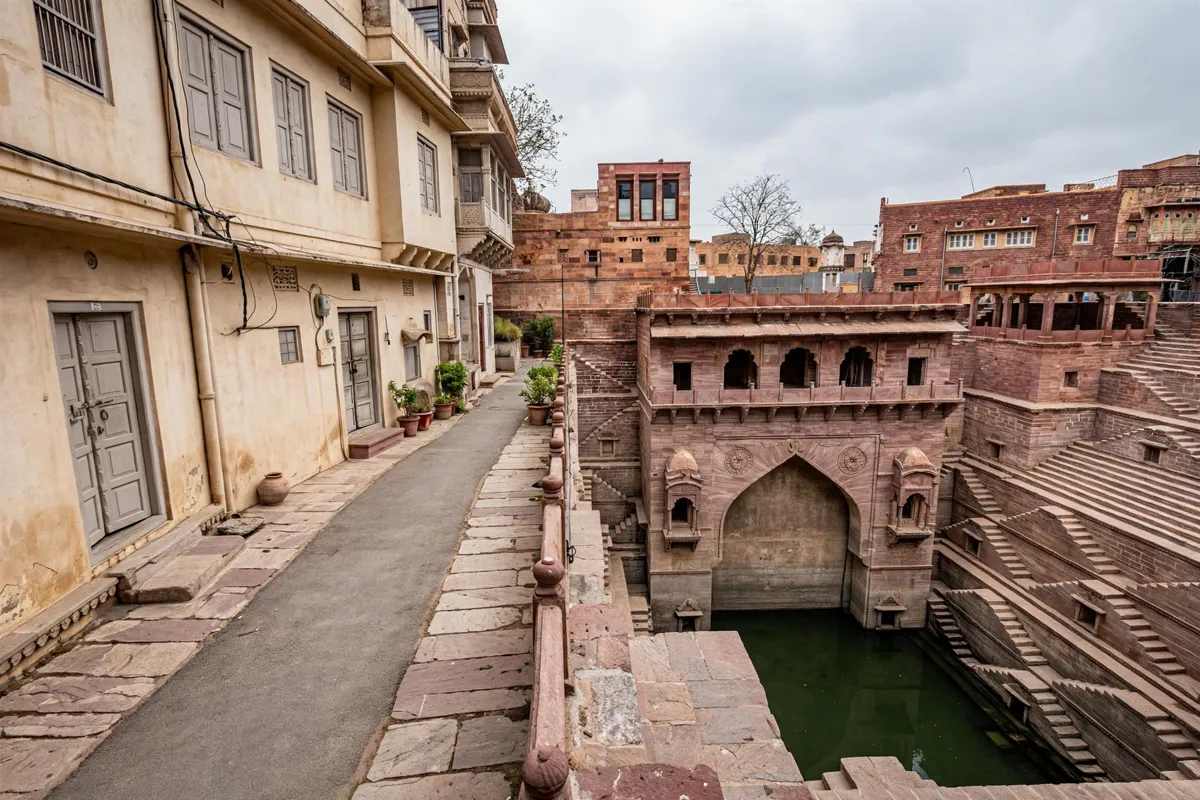
Toorji Ka Jhalra stands in the Gulab Sagar area of Jodhpur’s old city. Its address is Makrana Mohalla, Sutharo Ka Bass Road, Gulab Sagar, Jodhpur, Rajasthan 342001, India.
The stepwell sits in a densely populated part of the city, with old-city streets and shops around it. Nearby sights include Mehrangarh Fort and its place among Jodhpur’s sights, Jaswant Thada and the Clock Tower market, so you can place the stepwell among other old-city stops.
What makes Toorji Ka Jhalra historically important?
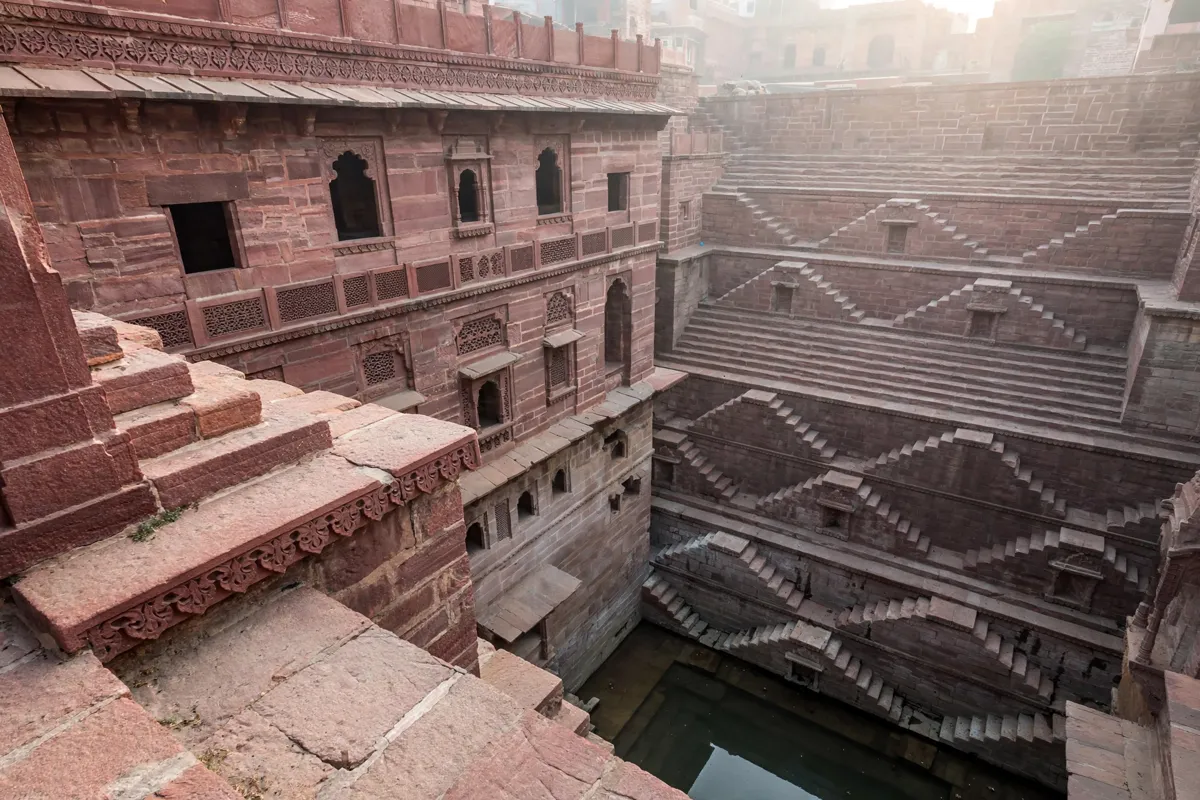
Toorji Ka Jhalra preserves features of Jodhpur’s traditional water-management systems and is made from rose-red sandstone. Accounts differ on its construction date: it is believed to date to the 1740s, while one account says it was commissioned in 1748 by Queen Tunwar Ji, consort of Maharaja Abhaya Singh Ji.
The stepwell is described as about 200 feet deep. Its four sides tell different parts of the story: one side has traces of a Persian wheel once powered by a pair of bullocks to draw water, while the other three have steps arranged in zigzag patterns.
Carvings and former adornments include dancing elephants, medieval lions, cow-shaped waterspouts and niches showing deities. A conservation process cleaned the tank and exposed carved red sandstone depicting deities, animals and figurines.
What should you know about access to the stepwell?
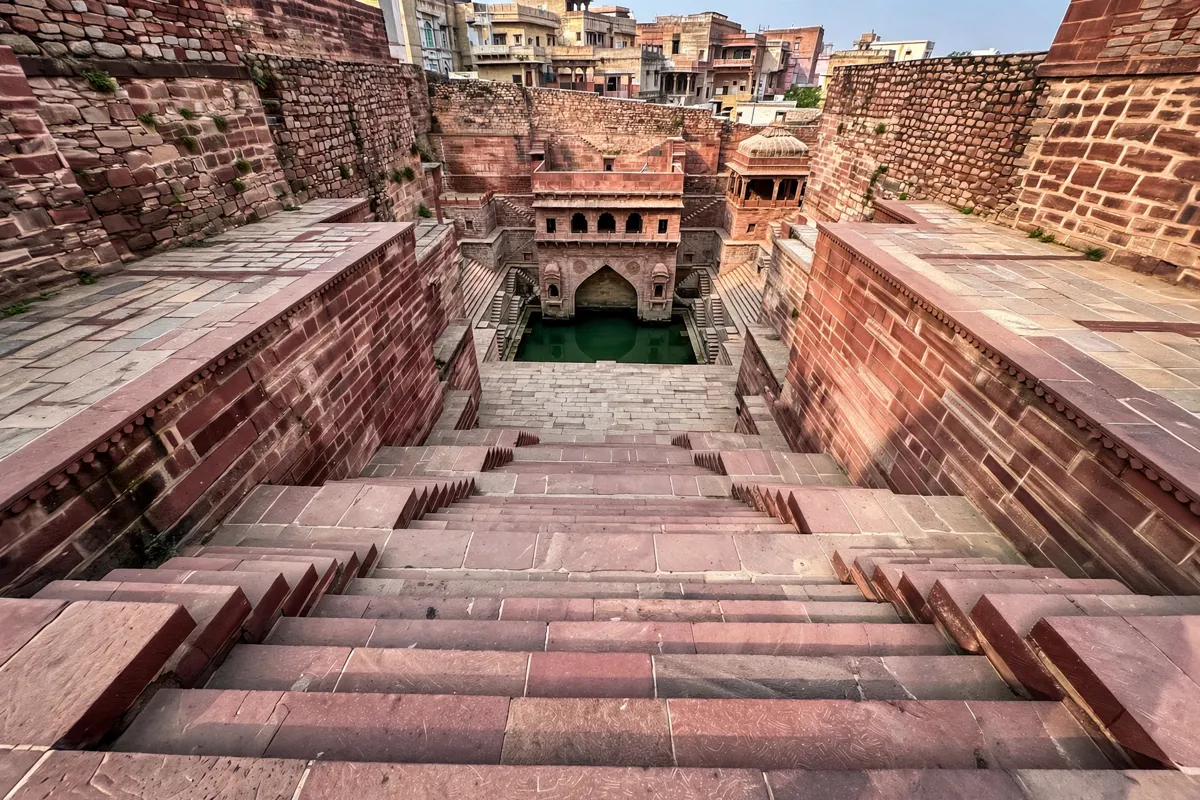
Incredible India gives Toorji Ka Jhalra’s opening hours as 24 hours. Opening information can change, so check the official site before you go.
The site’s steps descend into the tank, making the stairway itself a key part of the visit. Take care around the stone edges and on the steps, particularly when moving through the structure. The surrounding chowk is densely populated, and the stepwell remains in use by the city.
What can you see in the lanes around Toorji Ka Jhalra?
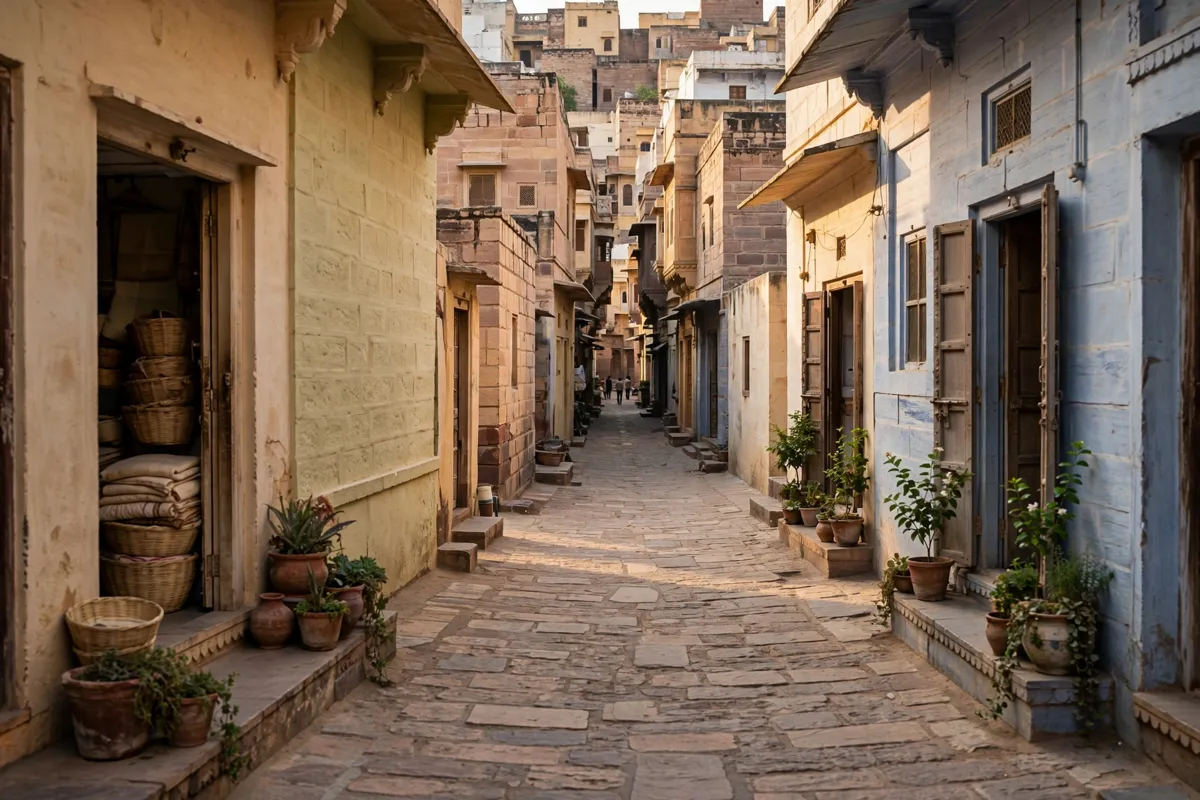
The streets around Toorji Ka Jhalra have bazaars and local artisan shops. Nearby markets sell handicrafts, textiles, jewellery, pottery and leather goods, giving you a chance to pair the stepwell with a browse through the old-city shopping streets.
The Clock Tower market is another nearby attraction. If market streets are part of your plan, which Jodhpur markets to visit can help you understand the area’s shopping options.
How can you combine the stepwell with a Jodhpur city walk?
Use Toorji Ka Jhalra as one stop on a walk through the old city, then continue toward the Clock Tower market or other nearby sights such as Mehrangarh Fort and Jaswant Thada. Guided heritage walks through the old city are also available.
For a fuller route, you can follow a one-day Jodhpur itinerary that includes other stops around the old city.
FAQs
Who commissioned Toorji Ka Jhalra?
One account says Queen Tunwar Ji commissioned the stepwell in 1748 during the reign of Maharaja Abhaya Singh Ji.
What architectural features should you look for?
Look for the zigzagging steps, traces of the Persian wheel and the carved stonework depicting deities and animals.
What is sold in markets near Toorji Ka Jhalra?
Nearby markets offer handicrafts, textiles, jewellery, pottery and leather goods.